
MILR Barrier Overview
The MILR (“Miller”) Barrier design is an innovative personnel barrier concept that seeks to create extended breach times and compounded difficulties when encountered by experienced breaching teams. It has the ability to interrupt and delay high priority adversary pathways, forcing potential adversaries to less valuable, higher attrition corridors. MILR can be designed and built in various configurations to grant a specifically desired minimum delay time. MILR is modular, so it can be built in sections then brought into place and quickly installed. The barrier is safe to work around with no sharp edges or moving parts, so surrounding workers or passersby aren’t put at risk because of it’s positioning. MILR can also use the energy from a breaching technique to create follow-on hazards and tracking mechanisms. MILR is the original barrier designed for interior use and MILR-E is the second design for exterior use.
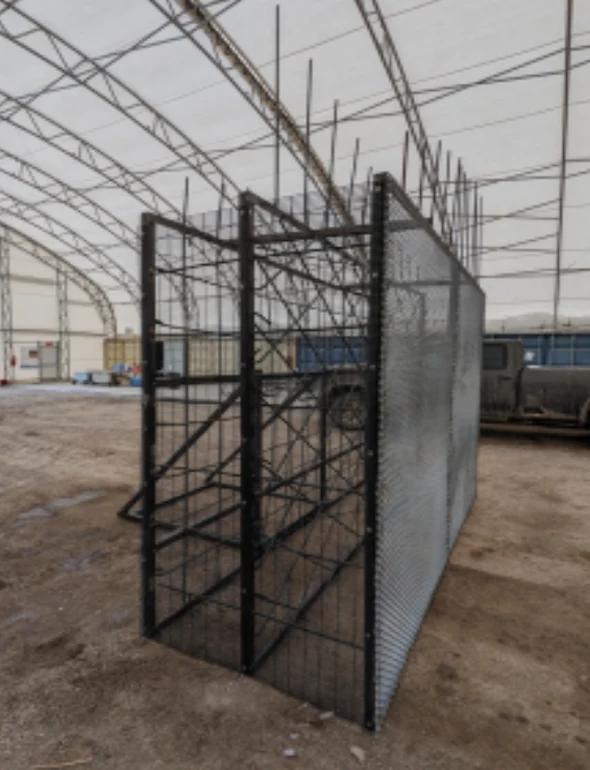
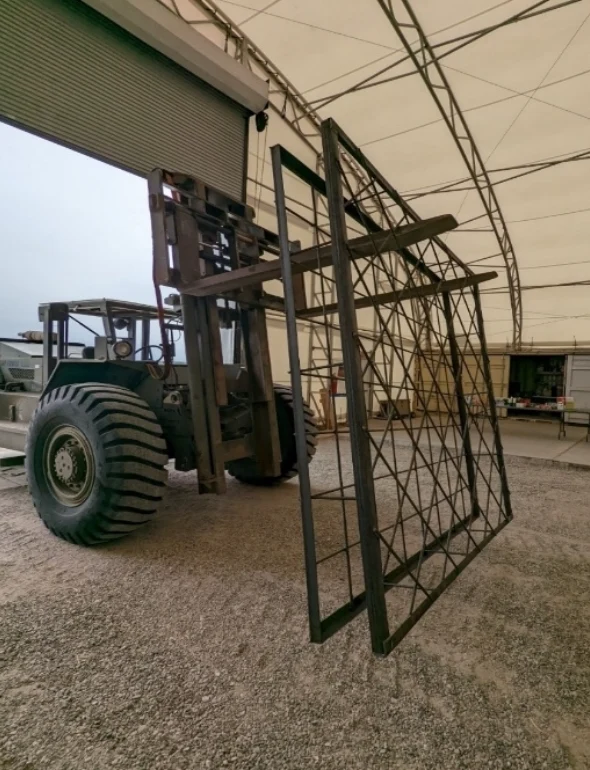
MILR Mechanical Breach Testing
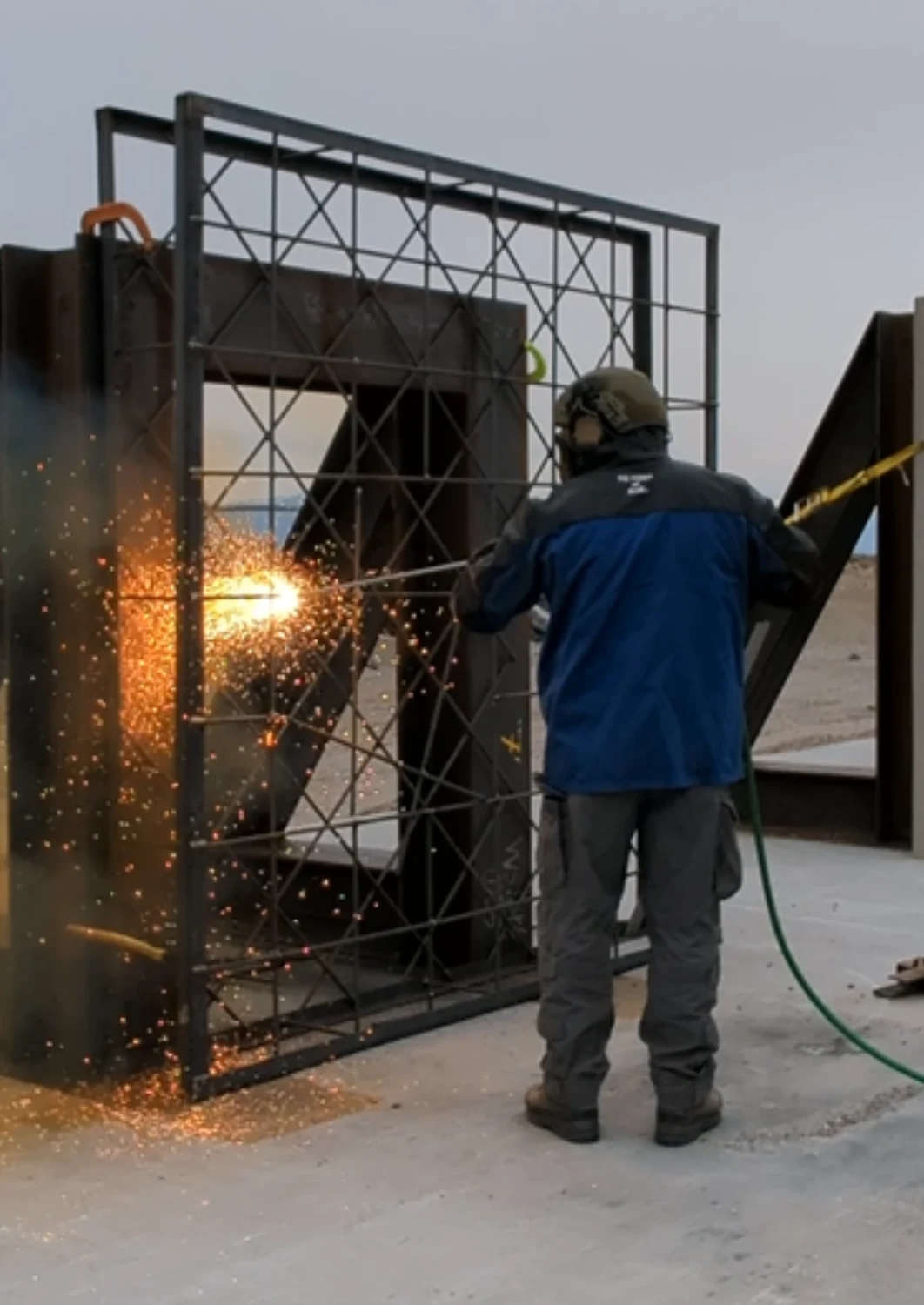
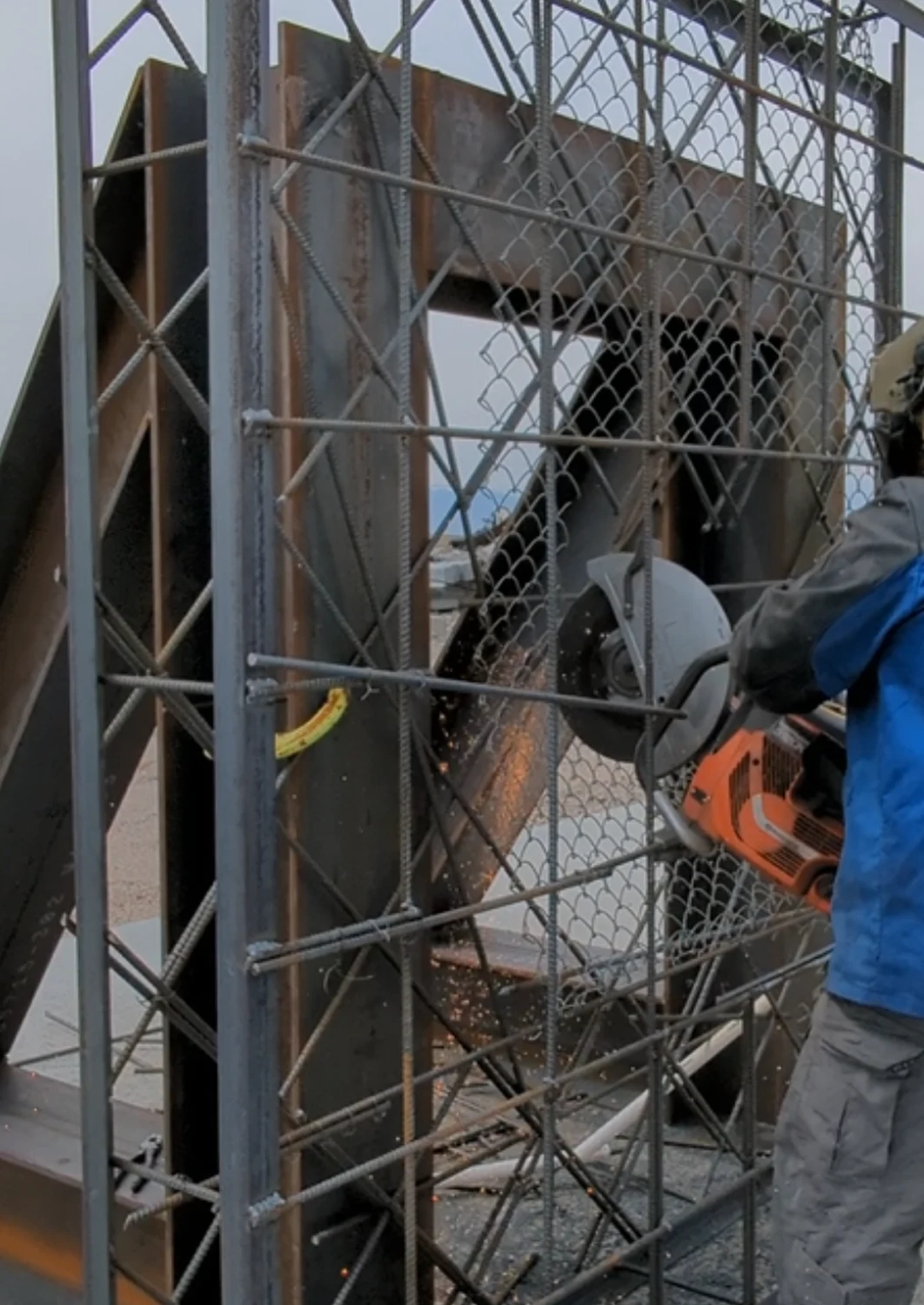
MILR Explosive Breach Testing


MILR-E (External) Build Pictures
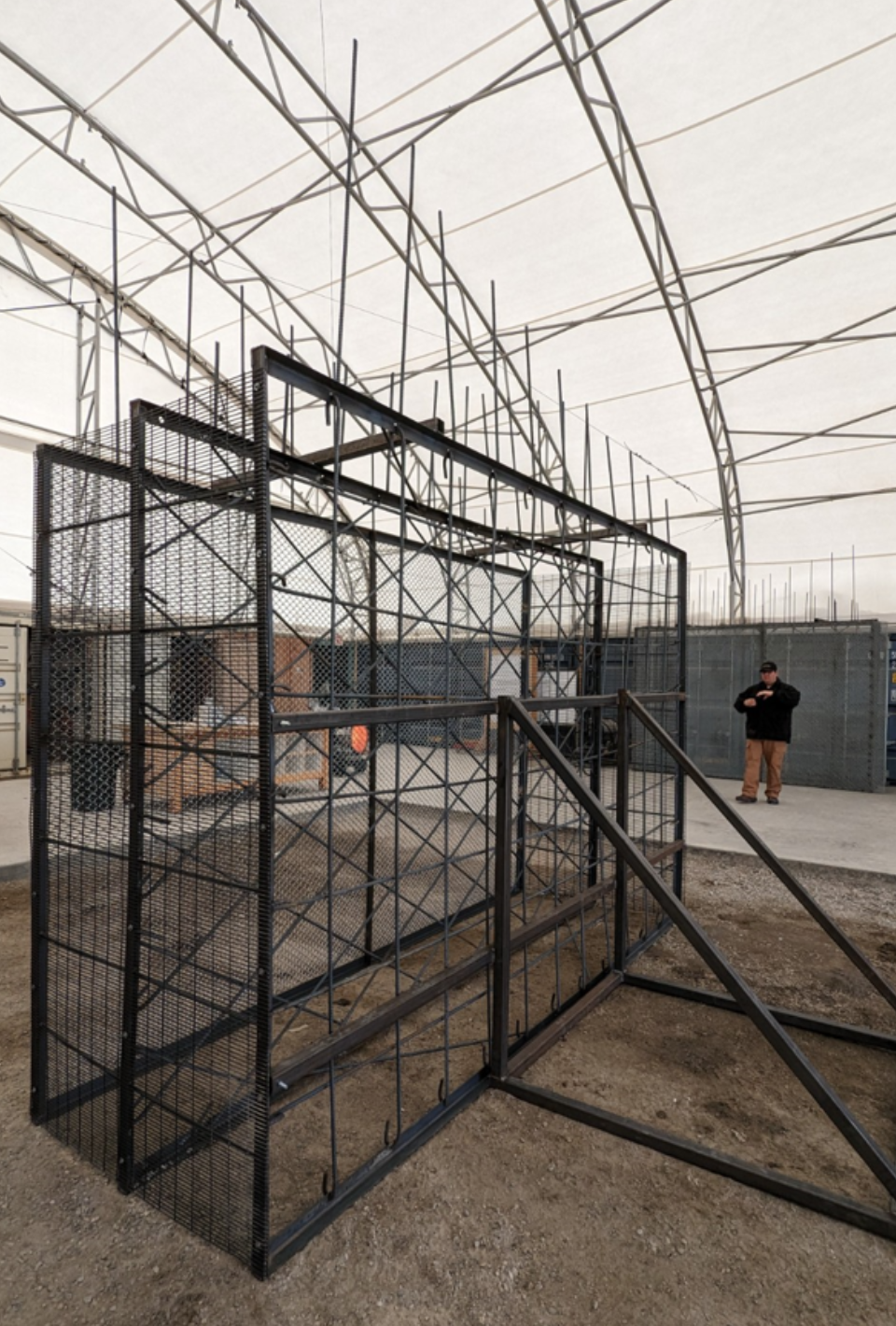
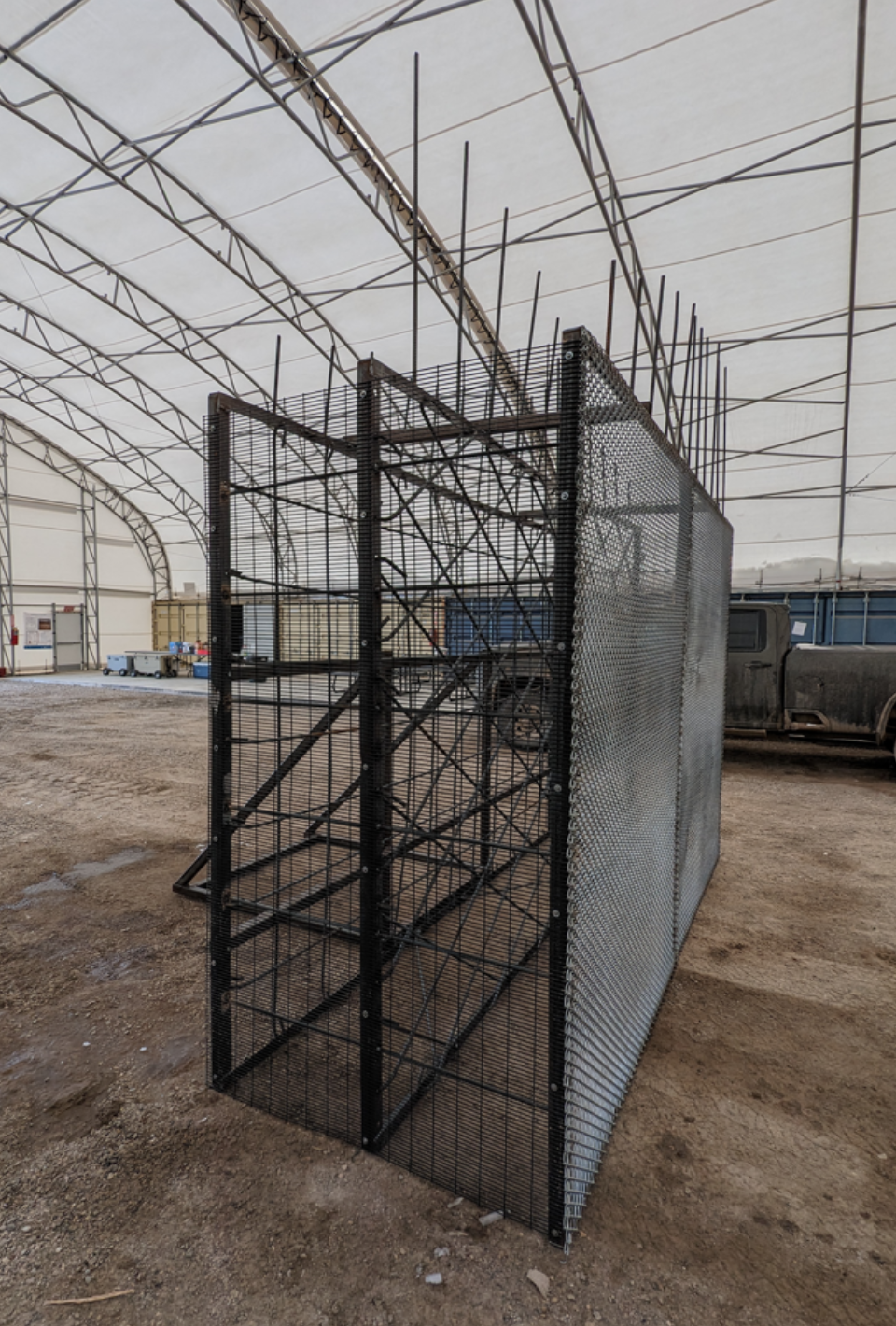
MILR-E (External) Mechanical Breach Testing
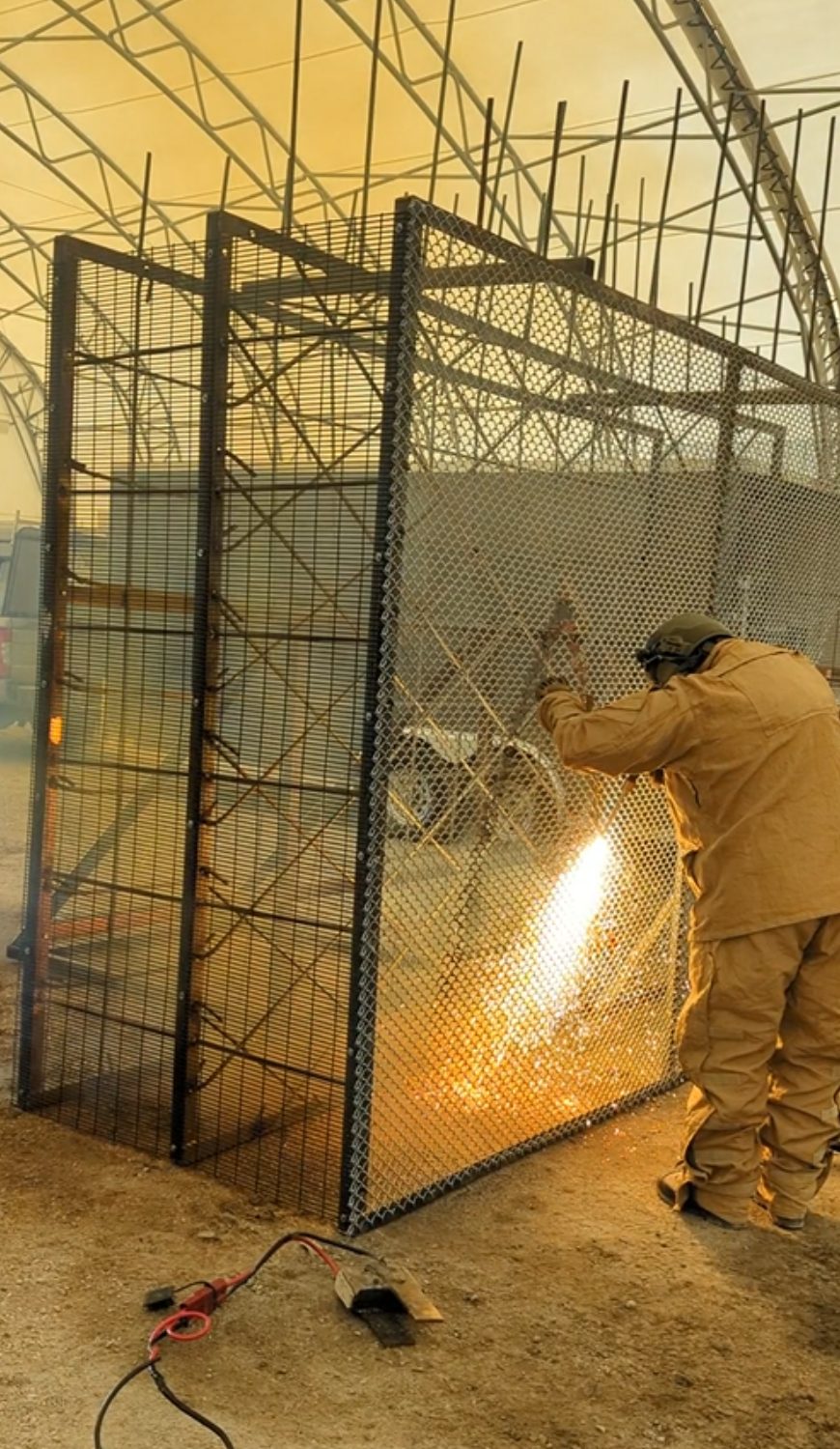

MILR-E (External) Explosive Breach Testing


Testing Results and Configurations
Mechanical, thermal and explosive testing of the MILR barrier was conducted by master breachers at Idaho National Labs National Security Test Range, during 2022 and 2023.
Mechanical tools results:
- Numerous tools including saws, grinders, and torches were used to create a man size traversable hole.
- Mechanical breach times for the final variation of the smallest MILR will range between ~1-3 minutes, depending on configuration.
- Mechanical breach times for the final variation of the smallest MILR-E will range between ~2-4 minutes.
- Both MILR and MILR-E can be configured with extra panels to create a specifically desired minimum delay time.
Explosive test results:
- Numerous explosive devices were used and all required at least one breaching charge per panel. Given that a standard MILR is a 2 panel barrier, an explosive breach was at best 1 minute and could be designed to any higher time requested with more panels. A standard MILR-E with 3 panels was at best 1.5 minutes and could also be designed to time requested.
Notes:
- Times do not include the difficulty of encountering the ink lubricant solution, if installed.
- The design of MILR purposefully creates confusion and breaching uncertainty. During testing, the barrier had to be cut more than once in some tests to create a man size traversable hole. The extra cuts would cost extra time in the breaching sequences.
Configurations tested:
- Any height and width configuration of MILR is possible, along with angled ends for directional changes. As for thickness, MILR was tested in both 6” and 12” panel separations with no major change in explosive effects noted. MILR-E was tested with 24” panel separations for stability.
- After testing, a third configuration was devised to incorporate lessons learned in the previous tests. The third configuration added loose bar and panel connectors to increase both the time and difficulty of breaching.
